


5 Key Factors to Consider When Choosing a Rubber Recess Former
Selecting a rubber recess former may appear straightforward at first. It is a relatively small component compared with the concrete element or the formwork system, yet it performs an important function in precast concrete production. The former positions the lifting anchor, forms a recess in the concrete surface, and ensures that the lifting clutch can connect properly after demoulding. When the correct model is used, installation is easier, anchor placement is more consistent, and the lifting system can operate as intended. When the former is incompatible with the anchor, formwork, or production process, however, problems can emerge during fitting, concrete pouring, demoulding, or lifting.
A common mistake is to select a recess former solely by its load group or colour. Two products that appear similar may have different internal shapes, dimensions, or fixing arrangements. For this reason, the selection process should consider the complete lifting-anchor system and the conditions under which it will be used. The following five factors provide a practical framework for evaluating a rubber recess former before placing an order.
What Is a Rubber Recess Former?
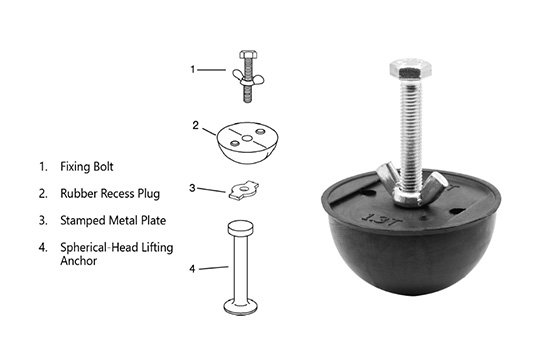
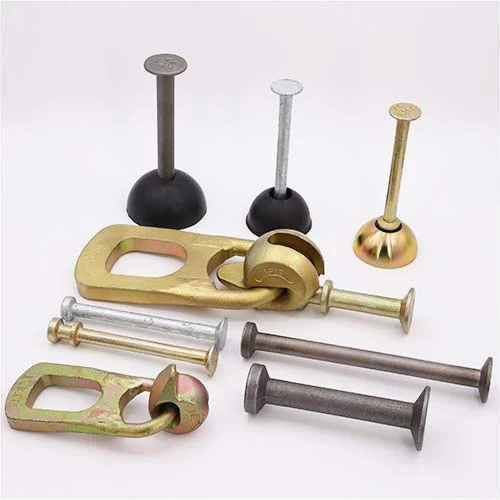
A rubber recess former is a reusable component used to position a lifting anchor and create a recess in a precast concrete element. During production, the lifting anchor is fitted into the rubber former, and the assembly is secured to the formwork before concrete is poured. After the concrete has cured and the former has been removed, the resulting recess provides access for the lifting clutch to connect to the anchor.
The former therefore performs two connected functions: it helps hold the anchor in the required position during casting, and it protects the space needed for the subsequent lifting operation. This means that its suitability cannot be judged only by its external appearance. The internal cavity must accommodate the anchor, the body must remain closed during pouring, and the fixing arrangement must keep the assembly stable while concrete is placed and vibrated.
Match the Former to the Lifting Anchor Type
The first and most important consideration is compatibility with the lifting anchor. Before choosing a recess former, confirm the type and model of the anchor being used. The former must match the anchor head and allow the lifting clutch to connect correctly once the recess has been formed.
Different lifting-anchor systems can use different head geometries and connection principles. A former that works with one system should not automatically be assumed to work with another, even if the load capacities appear comparable. The internal cavity must engage the anchor as intended, and the external shape must produce a recess that gives the clutch adequate access.
This check is particularly important when a manufacturer is introducing a new lifting-anchor model, changing suppliers, or combining products from different sources. In such cases, the former should be selected against the actual anchor model and not only against a general product category. Where drawings, product codes, or technical specifications are available, these provide a more reliable basis for verification than visual similarity.
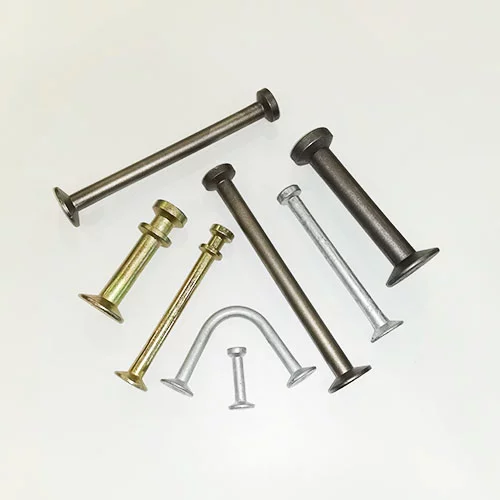
For a pin anchor lifting system, for example, the former should be selected specifically for the compatible pin anchor and lifting clutch arrangement. This demonstrates why anchor compatibility should be treated as the foundation of the selection process. Load capacity, dimensions, and fixing method are all important, but they are useful only after the anchor interface has been established.
Choose the Correct Load Group
Rubber recess formers are available for different lifting-anchor load groups, such as 1.3T, 2.5T, 5T, and higher capacities. The load group of the former must correspond to the load group specified for the lifting anchor. A mismatch can create fit or performance problems and may undermine the intended operation of the lifting system.
Colour coding can help with product identification, but it should not be relied upon as the only verification method. Different product ranges may use colours differently, and older stock may not follow the same convention as current products. Buyers should always verify the model code, technical description, and approved load group.
It is also important to understand that choosing the correct load group alone does not confirm that a former is suitable. Two formers intended for the same load group may still differ in anchor compatibility, internal geometry, or fixing method. The load group narrows the selection, but it does not replace a full compatibility check.
Procurement teams should record the anchor capacity and former product code together in purchasing documents. This reduces the risk of an incorrect substitution when products are ordered again or when a different supplier is used. For replacement formers, comparing the existing product code and key technical information with the proposed replacement is a useful first step.
Check the Recess Former Dimensions
The dimensions of the recess former must accommodate the lifting anchor and create sufficient space for the lifting clutch. Buyers should check the diameter, height, and internal shape rather than relying only on the nominal load group.
The internal shape is particularly important because it determines how the anchor sits inside the former and whether the rubber body can close completely. If the cavity is too small or incorrectly shaped, the anchor may not seat properly. If the external dimensions are unsuitable, the recess may be too small for the clutch or may interfere with the intended position of the anchor.
When replacing an existing former, compare its product code and dimensions with the proposed replacement. Production teams may already have established a reliable installation process around a particular model, and a dimensionally different product could require changes to positioning or fixing. Even a modest difference in height or cavity geometry can affect the finished recess.
Dimensional compatibility should also be reviewed against the formwork layout. Sufficient clearance is needed around the former so that it can be positioned accurately and removed without damaging the surrounding concrete. This consideration is especially relevant for elements with limited edge distance or closely spaced lifting points.
Select a Fixing Method Suitable for the Formwork
A rubber recess former must remain firmly attached to the formwork throughout concrete placement and vibration. The fixing method therefore needs to match both the former and the formwork.
One common design uses a threaded stud and wing nut. In this arrangement, the stud passes through a suitable mounting hole in the formwork, and the wing nut holds the former against the surface. Before selecting this type, confirm that the formwork has the correct mounting hole and that the former can sit flush and securely.
The fixing method should support efficient installation and removal without compromising stability. If the former cannot be fastened correctly, it may shift during pouring. Even a small movement can affect anchor alignment or alter the shape of the recess. The result may require additional inspection or corrective work after demoulding.
The selected method should also be practical for the production team. Operators need adequate access to tighten and release the fixing, and the method should suit the formwork material and production sequence. Standardising fixing components where possible can reduce handling errors and make repeated installation more consistent.
Evaluate Rubber Quality and Reusability
Because the former is intended for repeated use, rubber quality and condition have a direct effect on production reliability. A suitable former should retain its shape through repeated fitting, concrete pouring, demoulding, cleaning, and storage.
Inspect the rubber body before each use. Cracks, cuts, permanent deformation, hardening, or concrete buildup can affect how the former closes and how accurately it forms the recess. The former should remain flexible enough to be installed and removed without excessive force, while still holding the anchor securely during casting.
Cleaning is an important part of maintaining performance. Concrete residue should be removed before it builds up on the contact surfaces. Proper storage also helps prevent distortion and damage between production runs. Formers should be kept in conditions that protect the rubber from unnecessary compression or exposure to harmful substances.
A damaged former should not continue in service simply because it remains physically attached to the formwork. If cracking or deformation prevents reliable closure or produces an inconsistent recess, replacement is the safer and more practical choice. Evaluating reusability therefore supports both product quality and operational efficiency.
Selection Checklist
Before ordering a rubber recess former, confirm the following:
- The lifting-anchor type and exact model
- Compatibility with the lifting clutch
- The required load group
- The former’s product code and technical specification
- Diameter, height, and internal cavity shape
- Formwork mounting-hole dimensions
- Suitability of the fixing method
- Clearance for installation and removal
- Rubber condition and expected service life
A short checklist of this kind is useful for both new production setups and repeat orders. It also provides a clear basis for communication between engineering, purchasing, and production teams.
Common Mistakes to Avoid
The most frequent selection error is choosing by load group alone. This can lead to a poor anchor fit even when the stated capacity is correct. Other common problems include ignoring dimensional compatibility, using a fixing method that does not suit the formwork, relying on colour instead of the product code, and reusing formers after they have become cracked or deformed.
These mistakes are often easy to prevent during the selection stage. A technical review of the anchor, former, and formwork arrangement is more reliable than making an assumption based on appearance or a single specification.
Choosing the right rubber recess former requires a systematic review of five factors: lifting-anchor compatibility, load group, dimensions, fixing method, and rubber quality. These factors are closely connected. A former should be selected as part of the complete lifting system, with its product code and technical details verified before purchase.
Correct selection helps support accurate anchor positioning, consistent recess formation, efficient installation, and reliable repeated use. For a replacement former or a new production setup, buyers should provide the lifting-anchor model, required load group, formwork details, and technical drawing where available. This allows the supplier to recommend a suitable former and reduces the risk of costly incompatibility in precast concrete production.
Article Navigation
PRECAST CONCRETE ACCESSORIES
OTHER RELATED ARTICLE
- 1.How to Choose High-Quality Shuttering Magnetic Products and Suppliers Guide
- 2.Applications and advantages of swivel hoist rings: HULK Metal provides you with safer and more flexible lifting solutions
- 3.Lifting Clutch VS Lifting Ring Clutch:Definition, Working Principle, Application Scenarios, and Selection Guide
- 4.An In-Depth Guide to Erection Anchors, Single-Hole Spread Anchors and Two-Hole Spread Anchors
- 5.Application and Significance of Lifting Anchors in Precast Concrete Accessories
Other Precast Concrete Accessories You Might Want to Know
You can click to learn more about HULK Metal precast concrete accessories such as lifting anchors, precast sockets, spread anchors, shuttering magnets, cast-in channels, wire loop boxes, and other precast concrete accessories you might want to know.