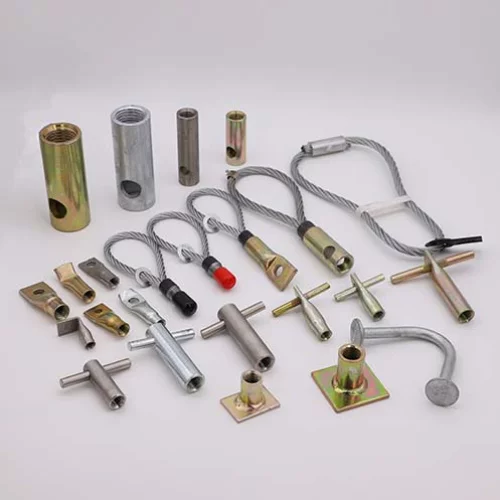
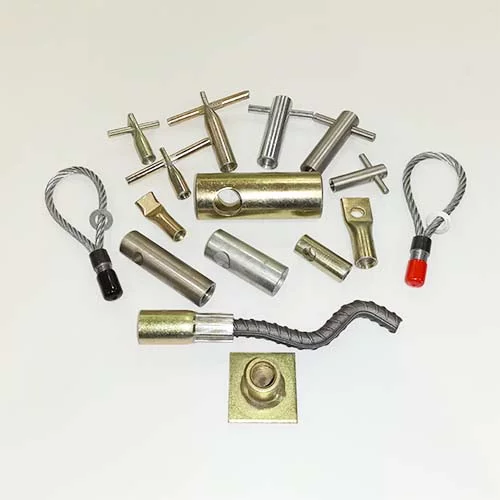
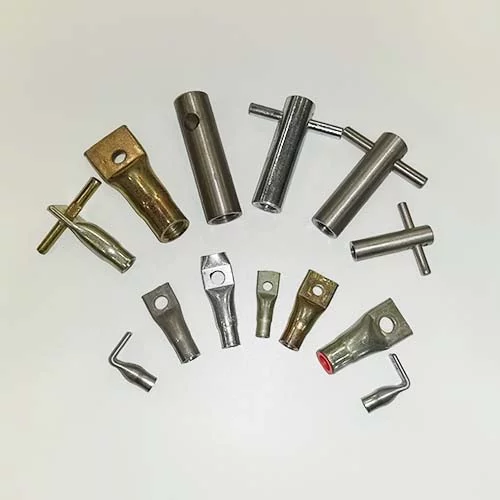
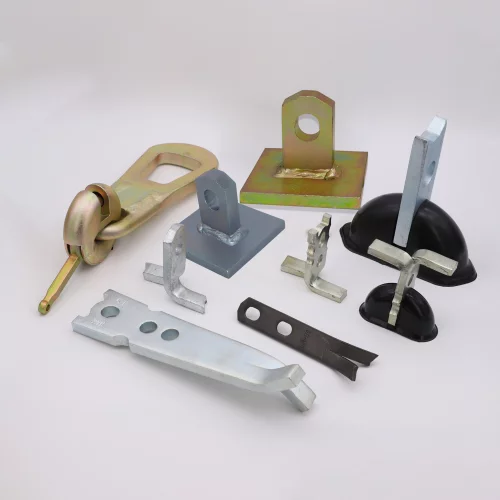
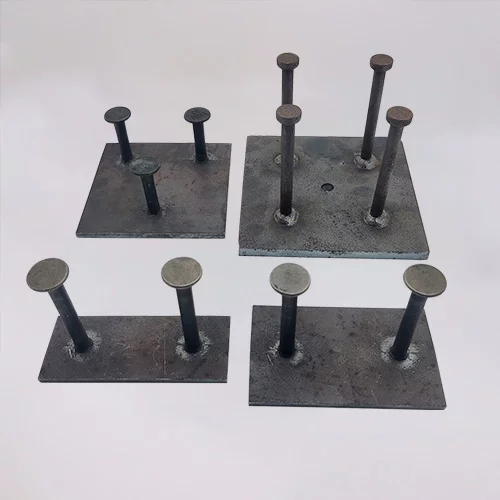

How Foot Anchors Work in Precast Elements?

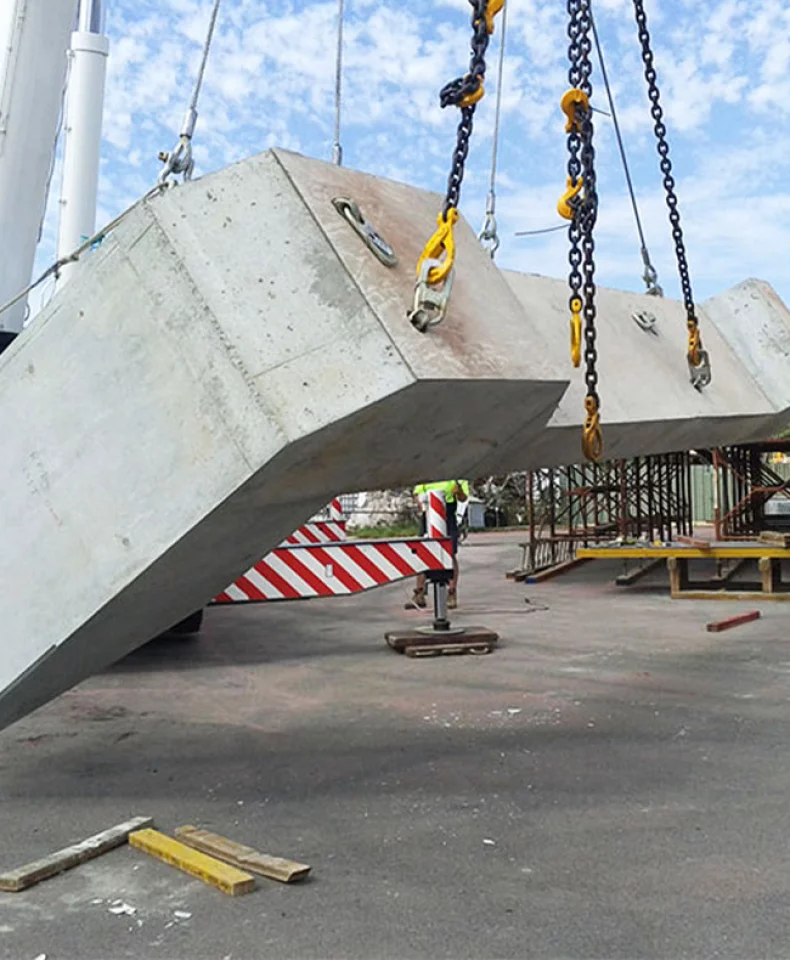
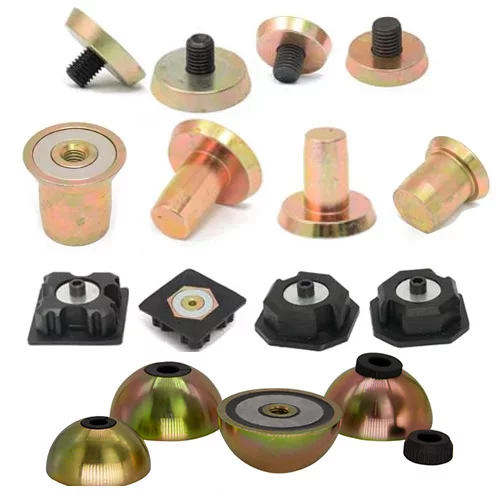
Safe and efficient lifting is one of the most critical stages in the lifecycle of precast concrete elements. From demolding and yard storage to transportation and final installation, every panel, wall unit, beam, or slab must be handled with controlled and predictable load transfer. Among the most reliable embedded lifting components used in modern precast systems is the Foot Anchor, commonly known as the spherical head anchor,dog bone anchor, lifting pin anchor.
The Engineering Concept Behind Foot Anchors
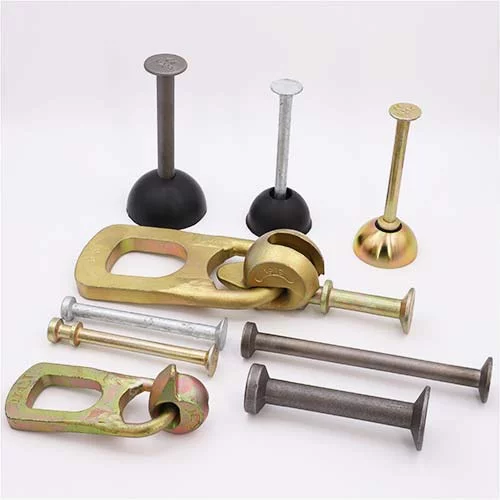
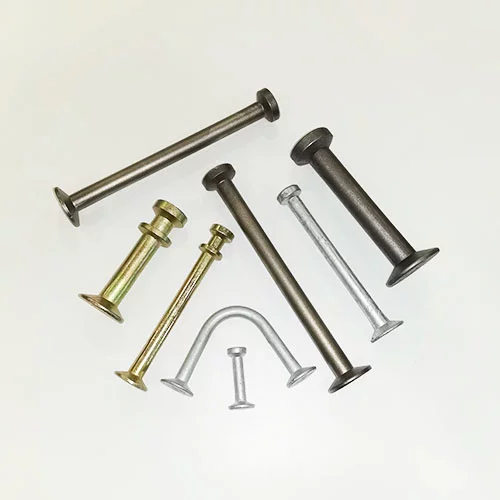
Foot Anchors are specifically engineered embedded lifting devices designed to transmit tensile forces from lifting equipment into concrete elements. Unlike improvised lifting loops or bent reinforcing bars, spherical head anchor systems are developed as integrated lifting solutions consisting of:
Spherical Head Anchor (Foot Anchor)
Matching Recess Former
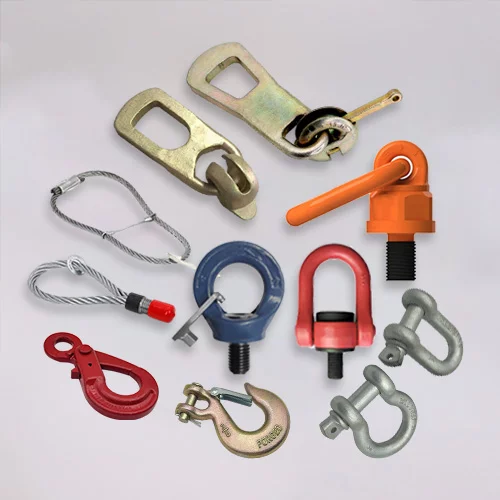
Corresponding Lifting Clutch
Each component is designed within a defined load group classification, ensuring compatibility and preventing incorrect assembly during operation.
The defining structural feature of the Foot Anchor is its round, symmetrical anchor foot. This geometry eliminates the need for directional positioning during installation. Unlike some embedded devices that require specific alignment relative to load direction, the symmetrical foot design allows installation without rotational concern, significantly improving efficiency in precast production environments.
Load Transfer Mechanism Inside Concrete
The core function of a Foot Anchor is to safely transfer lifting forces into the surrounding concrete mass. When tensile force is applied through the lifting clutch, the anchor shaft and foot activate a defined stress zone in the concrete.
Extensive experimental research conducted at Technical University in Darmstadt demonstrated that spherical head anchors initiate a predictable cone-shaped cracking pattern when subjected to tensile load. This cone-shaped stress distribution is not a defect; it is an engineered and anticipated load transfer mechanism.
Cone-Shaped Failure Principle
Under tensile loading, the anchor does not rely solely on bonding or friction. Instead, it mobilizes a three-dimensional volume of concrete above the anchor foot. The resulting cone-shaped stress zone distributes the load across a broader area, reducing localized stress concentration and enhancing lifting reliability.
The size and stability of this concrete cone depend on several factors:
Embedment depth
Concrete compressive strength
Edge distances
Element thickness
Presence of reinforcement
Influence of Embedment Depth
Longer anchors with greater embedment activate a larger section of concrete. As embedment depth increases, the projected cone expands, increasing the volume of engaged material and improving load-bearing capacity.
For this reason, anchor length is not arbitrary. It is selected based on:
Required Working Load Limit (WLL)
Concrete strength class
Cross-sectional dimensions of the precast element
In thin-walled structures, proper embedment calculation becomes even more critical to ensure sufficient concrete volume is mobilized during lifting.
Performance in Thin-Walled Precast Elements
One of the major advantages of the Foot Anchor system is its ability to function reliably even in thin-walled concrete panels.
Traditional reinforcing bars used as lifting loops rely on gradual load transfer along their embedded length. In contrast, spherical head anchors provide concentrated load distribution through the anchor foot geometry. This design activates a defined concrete cone rather than depending solely on bond strength.
When properly designed:
Load is securely transmitted even in reduced thickness panels
Stress distribution remains predictable
Structural integrity is maintained
However, thin elements subjected to slope tension may require additional reinforcement. Engineering evaluation must consider:
Load direction
Wall inclination
Edge distances
Shear components
When transverse tension acts at 90° to the floor plane (for example, vertically sloping wall elements), additional reinforcement is typically not required. Other standard wall units generally do not need supplementary reinforcement if design guidelines are followed.
Detailed Installation Process
Correct installation is essential to achieve the designed performance of the Foot Anchor system. The process follows a controlled sequence.
Step 1: Positioning Using the Recess Former
Before pouring concrete, the Recess Former is fixed to the formwork at the designated anchor location. The spherical head anchor is inserted into the recess former and secured.
The recess former ensures:
Accurate positioning
Correct embedment depth
Proper alignment of the spherical head
Because the anchor foot is symmetrical, no rotational orientation is required during installation. This reduces setup time and simplifies repetitive production tasks in precast factories.
Step 2: Concrete Pouring and Curing
Concrete is poured into the formwork with the anchor securely fixed in place. During curing, the concrete hardens around the shaft and anchor foot, forming a mechanical interlock.
The anchor length is specifically engineered to achieve optimal loading performance depending on the concrete cross-section and strength class. Proper curing time must be observed before demolding and lifting operations.
Step 3: Removal of the Recess Former
After the concrete reaches sufficient strength, the recess former is removed. Its removal leaves a precisely shaped recess in the concrete surface, exposing the spherical head.
This recess is dimensionally matched to the lifting clutch corresponding to the anchor’s load group.
Step 4: Coupling with the Lifting Clutch
The appropriate lifting clutch is inserted into the recess and locked onto the spherical head. Because each load group has its own matching clutch and recess former, it is mechanically impossible to incorrectly couple components from different load groups.
This compatibility system significantly enhances operational safety by eliminating cross-group misuse.
Step 5: Lifting Operation
Once the clutch is properly engaged, lifting begins. The system supports vertical lifting as well as angled and diagonal pulling, depending on handling requirements.
Behavior Under Various Load Conditions
Vertical Lifting
Under pure vertical tensile load, the anchor activates a symmetrical concrete cone. Stress distribution is evenly transmitted into the surrounding mass.
Diagonal Pull
During diagonal lifting, the lifting link may come into contact with the concrete surface. This contact enables direct transmission of horizontal load components into the concrete element.
The advantage of this mechanism is improved stability during handling, particularly when tilting or rotating panels.
Combined Tension and Shear
In real-world applications, lifting forces rarely act purely vertically. Combined tension and shear may occur during rotation, tilting, or installation.
Proper anchor selection must consider:
Load angle
Edge distances
Minimum concrete thickness
Reinforcement detailing
Engineering guidelines typically specify reduction factors for angled lifting to maintain safety margins.
Engineering Design Considerations
Successful application of Foot Anchors requires systematic engineering evaluation.
Selection Criteria
Working Load Limit
Safety factor requirements
Concrete compressive strength
Element geometry
Edge spacing
Transportation conditions
Safety and Testing
Foot Anchor systems are designed with safety margins based on extensive laboratory testing. Controlled load tests verify performance under tensile and angled loading conditions.
Predictable failure modes are an essential part of safety design. The cone-shaped breakout pattern allows engineers to calculate load capacity accurately using established structural principles.
System-Based Safety Advantages
One of the major strengths of spherical head anchor systems is integrated compatibility.
Each load group includes:
Specific anchor dimensions
Matching lifting clutch
Corresponding recess former
This system approach provides several advantages:
Prevention of incorrect coupling
Standardized installation procedures
Improved site safety
Reduced human error
By eliminating interchangeable misuse between load groups, the system ensures controlled lifting performance.
Why Manufacturing Quality Matters
The performance of a Foot Anchor depends not only on design but also on manufacturing quality. Forging consistency, material strength, heat treatment, and dimensional accuracy all influence reliability.
High-strength carbon or alloy steel is typically used to produce anchors through controlled hot forging processes. CNC machining guarantees precise spherical head tolerances for secure clutch engagement.
Surface treatment options such as galvanizing may be applied depending on environmental exposure requirements.
About HULK Metal
Selecting a reliable supplier is as important as selecting the correct anchor type. HULK Metal is a professional manufacturer specializing in precast concrete lifting systems, including spherical head Foot Anchors, Lifting Clutches, and Recess Formers.
With extensive experience in hot forging, precision machining, and structural load-bearing components, HULK Metal ensures strict control from raw material sourcing to final inspection. Each production stage—including forging, dimensional verification, and load testing—is conducted under systematic quality procedures.
HULK Metal operates with a comprehensive supply chain structure covering:
Raw material procurement
Forging production
Machining and finishing
Quality control inspection
Surface treatment
Packaging and logistics
This integrated system enables stable lead times, competitive pricing, and consistent bulk supply capacity.
For projects requiring customized load ratings, specific embedment lengths, or compliance with international standards, HULK Metal provides tailored manufacturing solutions based on engineering drawings and project requirements.
By combining structural engineering understanding with advanced manufacturing capability, HULK Metal delivers lifting hardware designed for reliability, safety, and long-term performance in precast construction applications.
Foot Anchors play a vital role in the safe handling of precast concrete elements. Through their symmetrical anchor foot design, predictable cone-shaped load distribution, and integrated clutch compatibility system, they provide secure and efficient lifting performance.
When correctly selected, properly installed, and manufactured to strict standards, Foot Anchors ensure stable load transmission even in thin-walled structures. Their engineered behavior under vertical and angled loads makes them a trusted solution across modern precast construction projects.
For engineers, contractors, and precast manufacturers seeking dependable lifting systems, partnering with an experienced and technically capable supplier is essential to achieving both structural safety and operational efficiency.
Article Navigation
PRECAST CONCRETE ACCESSORIES
OTHER RELATED ARTICLE
Other Precast Concrete Accessories You Might Want to Know
You can click to learn more about HULK Metal precast concrete accessories such as lifting anchors, precast sockets, spread anchors, shuttering magnets, cast-in channels, wire loop boxes, and other precast concrete accessories you might want to know.